The United Kingdom remains a top destination for international students, combining world-class education with vibrant…
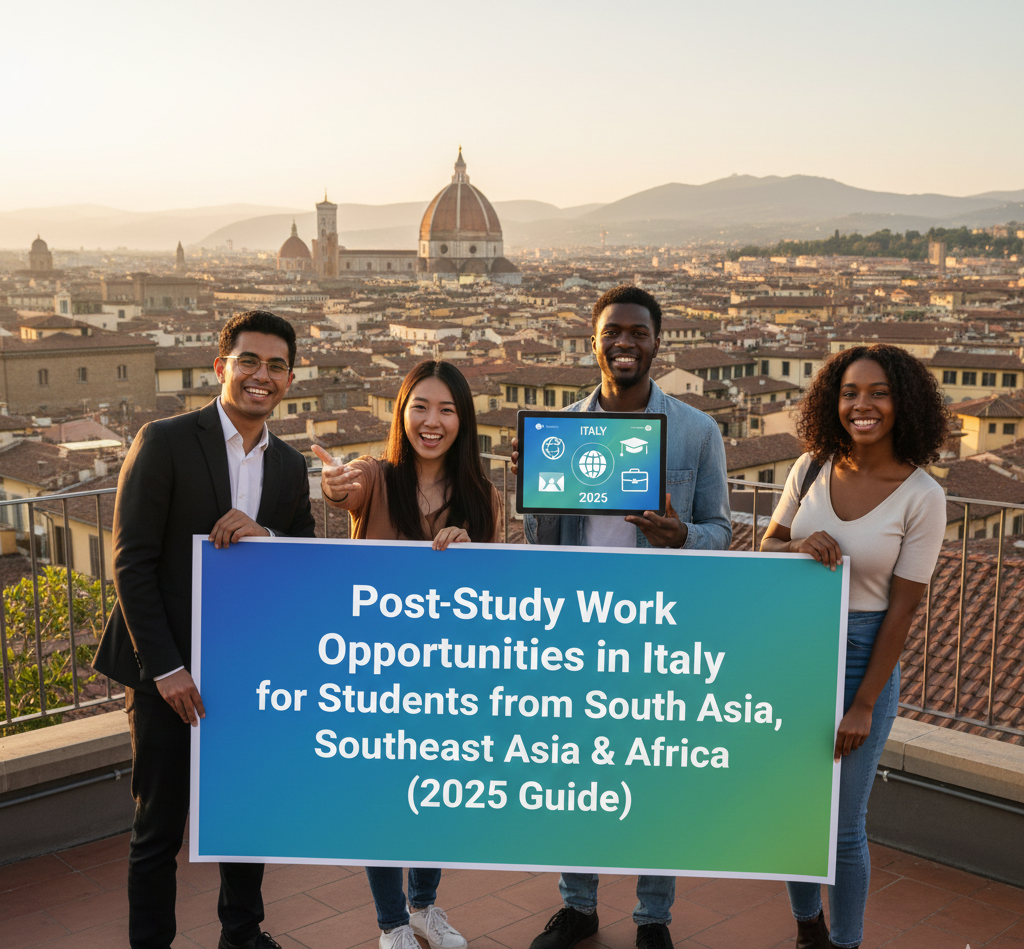
Post-Study Work Opportunities in Italy for Students from South Asia, Southeast Asia & Africa (2025 Guide)
Post-study work opportunities in Italy for international students in 2025 are becoming increasingly attractive for students from South Asia, Southeast Asia, and Africa. Italy offers affordable education, a 12-month job-search visa, and growing demand for skilled professionals across industries. This guide explains how international students can stay, find jobs, and build a career in Italy after graduation.
This guide explains how students from countries such as India, Pakistan, Bangladesh, Sri Lanka, Nepal, Vietnam, Indonesia, the Philippines, Malaysia, Kenya, Nigeria, and Ghana can legally stay and work in Italy after completing their studies.
Key Highlights
- 12-month post-study job search visa available
- Multiple work visa pathways including EU Blue Card
- High demand in IT, engineering, and business sectors
- Affordable education compared to other EU countries
1. Post-Study Stay-Back Option in Italy
After completing a Bachelor’s, Master’s, or PhD degree in Italy, international graduates can apply for the Permesso di Soggiorno per Attesa Occupazione, commonly known as the job-search residence permit.
Who Can Apply?
- Graduates of Italian universities (Bachelor’s, Master’s, or PhD)
- Students holding a valid study residence permit at the time of application
- Applicants with proof of accommodation, health insurance, and sufficient financial resources
Validity & Benefits
- Valid for up to 12 months
- Allows graduates to legally remain in Italy
- Full-time job search is permitted during this period
Official details are available on Italy’s official study portal:
Study in Italy – Official Government Portal
2. Converting Your Stay-Back Permit into a Work Visa
Once you secure a job offer during your job-search period, you can convert your residence permit into a long-term work authorization.
Main Work Visa Pathways
➡️ Lavoro Subordinato (Work Permit)
This option is for graduates who receive a full-time employment contract from an Italian employer.
➡️ EU Blue Card
Designed for highly skilled professionals, the EU Blue Card requires:
- A recognized university degree
- A job offer meeting Italy’s minimum salary threshold
This route is especially suitable for graduates in IT, engineering, research, finance, and management roles.
➡️ Self-Employment Visa
Available for freelancers, entrepreneurs, and startup founders, subject to additional approvals.
More information:
EURES – European Job Mobility Portal
Best Cities in Italy for Jobs
- Milan – Finance, Business, IT
- Rome – Government, Tourism
- Bologna – Education, Research
- Turin – Engineering, Automotive
3. High-Demand Career Sectors in Italy (2025)
Italy is currently facing labor shortages in several industries, opening strong opportunities for international graduates.
Top Hiring Sectors
- Engineering (Mechanical, Civil, Automation)
- Information Technology (Software Development, AI, Data Science, Cybersecurity)
- Business, Finance & Supply Chain Management
- Healthcare & Life Sciences
- Tourism, Hospitality & Culinary Arts
- Fashion, Design & Luxury Brand Marketing
Expected Starting Salaries
Graduates can typically expect annual salaries ranging from €25,000 to €35,000, depending on the role, industry, and region.
Post-Study Work in Italy – Quick Overview (2025)
| Factor | Details |
|---|---|
| Stay-back duration | 12 Months |
| Main visa options | Work Permit, EU Blue Card, Self-Employment |
| Top sectors | IT, Engineering, Business, Healthcare |
| Average salary | €25,000 – €35,000 |
4. Why Italy Is Attractive for Students from Developing Regions
Italy offers several advantages for students from South Asia, Southeast Asia, and Africa:
- Affordable public universities with international recognition
- Multicultural academic environment
- Growing demand for skilled foreign professionals
- Relatively lower cost of living outside major metro cities
Cities with strong job markets include Milan, Rome, Bologna, Turin, and Florence.
5. Tips to Improve Your Post-Study Job Prospects
- Learn Italian up to B1 level or higher to access more job opportunities
- Complete internships or part-time roles during your studies
- Create a professional European-style CV and LinkedIn profile
- Start applying for jobs at least 3–4 months before graduation
- Attend university career fairs and networking events
You can explore verified job portals such as:
ANPAL – Italy’s National Employment Agency and Working in Italy (EU Official Guide)
Frequently Asked Questions (FAQs)
1. Can international students stay in Italy after graduation?
Yes, students can stay for 12 months using a job-search residence permit.
2. Is Italy good for post-study work in 2025?
Yes, due to labor shortages and growing demand for skilled professionals.
3. Do I need Italian language skills?
Basic Italian (B1 level) improves job opportunities significantly.
Final Thoughts
Italy’s post-study work framework offers a realistic and structured pathway for international students to transition from education to employment. With a 12-month job-search permit, multiple work visa routes, and increasing demand for skilled graduates, Italy continues to be a strong study-to-career destination in 2025.
For students from South Asia, Southeast Asia, and Africa, early preparation, language skills, and proactive job searching can significantly improve long-term career outcomes in Italy.
Read Our Other Helpful Guides
Related Posts



Comments (0)