
The United Kingdom remains a top destination for international students, combining world-class education with vibrant…
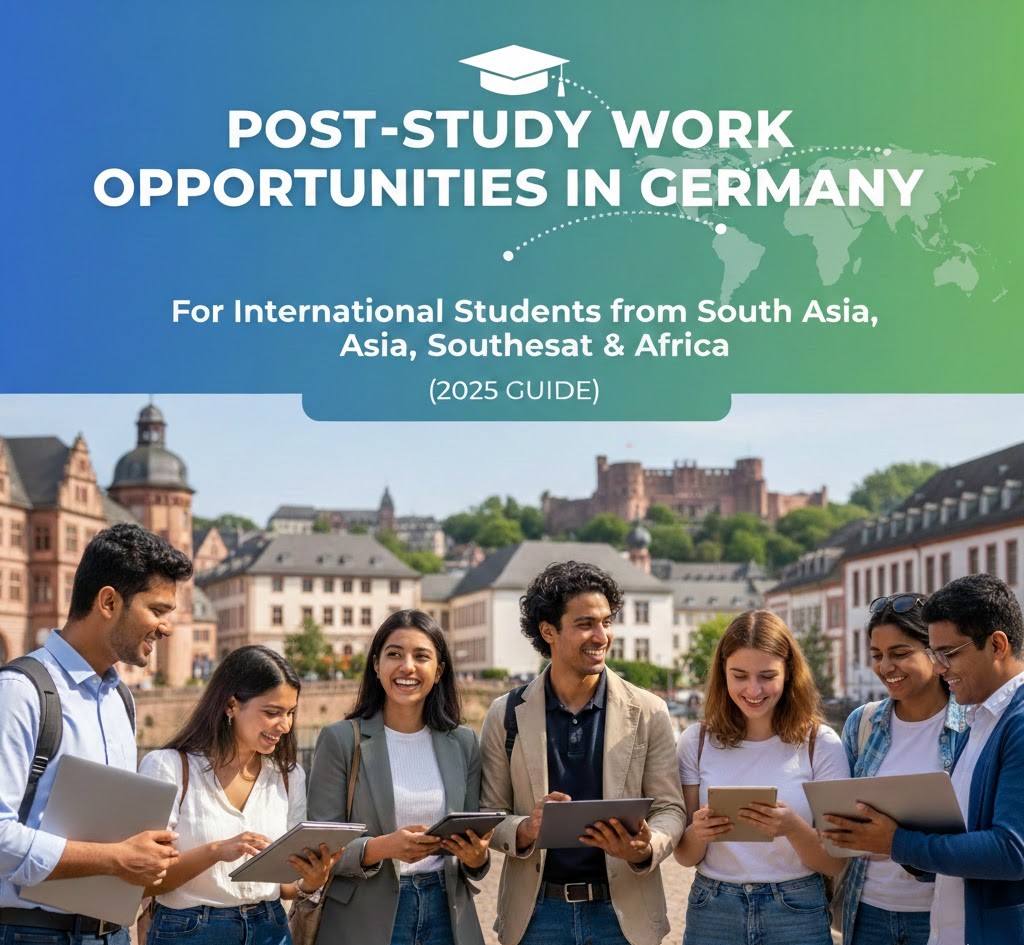
Post-Study Work Opportunities in Germany for International Students from South Asia, Southeast Asia & Africa (2025 Guide)
Germany has become one of the most attractive study destinations for students from India, Pakistan, Bangladesh, Sri Lanka, Nepal, Vietnam, Philippines, Indonesia, Malaysia, Kenya, Ghana, Nigeria, and other emerging economies. Beyond world-class education and an affordable cost of living, Germany offers one of the strongest post-study work (PSW) pathways in Europe — making it a top choice for students who want career growth and long-term settlement options.
This guide explains the post-study work opportunities in Germany in 2025, eligibility rules, high-demand careers, salary expectations, and tips tailored for students from South Asia, Southeast Asia, and Africa.
Germany Job Seeker & Post‑Study Work Guide – PostStudyWork.com
Quick Summary:
- Post-study work visa: 18 months
- Top pathway: EU Blue Card
- High-demand fields: IT, Engineering, Healthcare
- Average salary: €40,000–€65,000
Germany Post-Study Work Overview
| Feature | Details |
|---|---|
| Stay-back period | 18 months |
| Main visa | EU Blue Card |
| PR timeline | 21–33 months |
| Top sectors | IT, Engineering, Healthcare |
1. Germany’s Post-Study Work Visa: How It Works
After completing a degree from a German university, international students can apply for:
➡️ 18-Month Post-Study Job-Seeker Residence Permit
This route allows graduates to:
- Stay in Germany for 18 months after graduation
- Search for full-time employment related to their field
- Work in any job (even part-time or unrelated roles) during the job search
Eligibility Requirements
Students must:
- Successfully complete a recognized degree from a German university
- Show proof of health insurance
- Provide financial proof for living expenses
- Possess a valid passport and local registration (Anmeldung)
Once you secure a job relevant to your degree, you can upgrade to a work visa or the EU Blue Card.
Make it in Germany – Official Job Search & Opportunity Card Info
2. Pathways After the 18-Month PSW Permit
2.1 EU Blue Card
A popular and fast-track residency pathway for skilled professionals.
Requirements (2025):
- Job offer relevant to your degree
- Annual salary approx. €45,000–€50,000 (lower for STEM jobs)
- University degree recognized in Germany
Benefits:
- Fast-track permanent residency
- Mobility across EU countries
- Spouse can work full-time
2.2 German Work Visa for Qualified Professionals
If your job doesn’t meet Blue Card salary requirements, you can apply for:
- Skilled Worker Visa (for academic degrees)
- Specialist Visa (for vocational qualifications)
2.3 Permanent Residency (Niederlassungserlaubnis)
With an EU Blue Card, you can apply for permanent residency in:
- 21 months (with B1 German)
- 33 months (with basic German)
Without a Blue Card: Usually after 4 years of employment.
3. High-Demand Careers for International Graduates (2025 & Beyond)
Germany faces a severe shortage of skilled professionals — nearly 600,000 vacancies across critical sectors. Students from South Asia, Southeast Asia, and Africa are well-positioned to benefit.
Comprehensive Guide to Germany’s 2025 Post-Study Work Visa: Eligibility and Application Process
Top Sectors Hiring International Graduates
1. Engineering
- Mechanical
- Automotive
- Electrical
- Civil
- Renewable energy
Average starting salary: €45,000–€55,000 annually
2. IT & Computer Science
- Software development
- Cybersecurity
- AI & ML
- Data science
- Cloud engineering
Average starting salary: €50,000–€65,000
3. Healthcare & Life Sciences
- Nursing
- Biotechnology
- Pharmaceuticals
- Medical technology
Starting salary: €38,000–€55,000
4. Business & Finance
- Supply chain
- Logistics
- Finance & accounting
- Marketing & strategy
Starting salary: €40,000–€50,000
5. Hospitality & Tourism
- Hotel management
- Tourism operations
- Culinary professions
Starting salary: €30,000–€40,000
4. Why Germany Is Ideal for Students from South Asia, Southeast Asia & Africa
- Affordable or minimal tuition fees at public universities, making Germany highly cost-effective for international students.
- Transparent PR and work visa procedures — Germany provides clear guidelines for residence permits and career pathways.
- Part-time work opportunities up to 20 hours/week during studies and full-time during vacations.
- High demand for skilled and multilingual professionals — particularly in IT, engineering, healthcare, and business.
5. Salary Expectations in 2025
- IT & Software: €55,000 – €70,000
- Engineering: €48,000 – €60,000
- Business & Finance: €40,000 – €50,000
- Health & Nursing: €38,000 – €48,000
- Research & Academia: €45,000 – €55,000
Cities like Munich, Stuttgart, Frankfurt, and Hamburg offer higher salaries but also have a higher cost of living.
6. Tips to Maximize Post-Study Job Success
1. Learn German Early — Aim for at least B1 level to increase employability.
2. Build a German-style CV — Focus on achievements and clarity.
3. Leverage University Career Centres — Strong connections with local industries.
4. Apply 4–6 Months Before Graduation — Early submissions improve interview chances.
5. Gain Practical Experience — Internships and work placements are highly valued.
6. Network Actively — Use LinkedIn, student events, and job fairs.
2. Build a German-style CV — Focus on achievements and clarity.
3. Leverage University Career Centres — Strong connections with local industries.
4. Apply 4–6 Months Before Graduation — Early submissions improve interview chances.
5. Gain Practical Experience — Internships and work placements are highly valued.
6. Network Actively — Use LinkedIn, student events, and job fairs.
Frequently Asked Questions (FAQs)
1. How long can international students stay in Germany after graduation?
International students can stay in Germany for up to 18 months after completing their degree. During this period, they can search for full-time jobs and even work in part-time or temporary roles.
2. What is the Germany post-study work visa in 2025?
The Germany post-study work visa is an 18-month job-seeker residence permit that allows graduates to remain in the country and find employment related to their field of study.
3. What is the minimum salary for the EU Blue Card in Germany?
The EU Blue Card typically requires a salary of around €45,000–€50,000 per year. However, for high-demand STEM fields, the salary requirement may be lower.
4. Can I get permanent residency in Germany after studying?
Yes, international graduates can apply for permanent residency. With an EU Blue Card, you can get PR in 21–33 months, depending on your German language level.
5. Is Germany a good option for South Asian students in 2025?
Yes, Germany is one of the best options due to low tuition fees, strong job demand, and clear PR pathways. It is especially attractive for students from India, Pakistan, Bangladesh, and other developing regions.
6. Do I need German language skills to get a job?
While some international companies offer English-speaking roles, learning German up to at least B1 level significantly improves your job opportunities.
7. Which jobs are in high demand in Germany for international students?
High-demand sectors include IT, engineering, healthcare, finance, and logistics. Germany currently has a strong demand for skilled professionals in these fields.
8. When should I start applying for jobs in Germany?
It is recommended to start applying for jobs at least 4–6 months before graduation to increase your chances of securing employment quickly.
7. Final Thoughts
Germany provides a dependable and rewarding post-study work pathway for students from South Asia, Southeast Asia, and Africa. With an 18-month post-study job search visa, clear career opportunities across key industries, and structured routes to permanent residency, Germany remains a top choice for career-focused students in 2025. For those aiming for global experience and long-term career growth, Germany ranks among the best study destinations.
Post‑Study Work Visa Germany 2025 – Leapscholar
Read Our Other Helpful Guides
Related Posts



Comments (0)