
The United Kingdom remains a top destination for international students, combining world-class education with vibrant…

Best Public Transport Cities for Students (2025 Ranking)
For international students, public transport can truly make or break the study abroad experience. Affordable and reliable commuting reduces daily expenses, saves time, and lowers stress — especially when navigating a new country in 2025. According to global public transport system studies, cities with strong transit networks consistently rank higher for student satisfaction.
After evaluating more than 40 global student cities, we ranked the Top 7 Public Transport Cities for Students based on affordability, coverage, safety, accessibility, and environmental impact. Rising living costs in major student hubs make transport efficiency more important than ever.
Evaluation Criteria
- Affordability: Student discounts, monthly pass pricing, and subsidy availability
- Coverage: Network reach, frequency, night services, and regional access
- Safety & Accessibility:Well-lit spaces, visible security measures, and facilities designed for students with disabilities
- Eco-Friendliness: Electric fleets and emission reduction initiatives
Top 7 Public Transport Cities for Students (2025)
1. Berlin, Germany
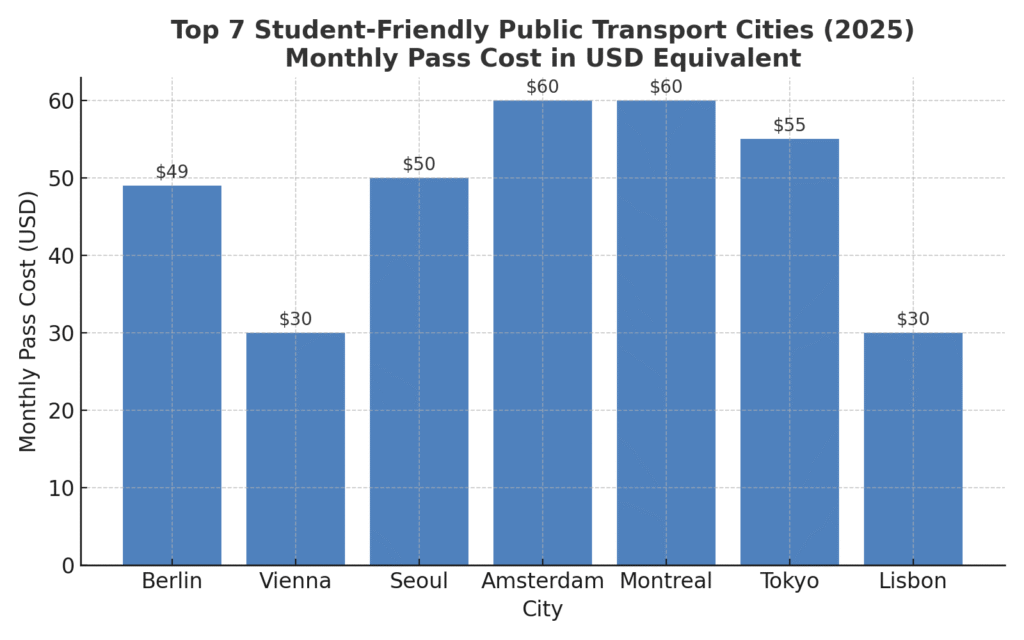
Student Monthly Pass: €49 (nationwide validity)
Berlin offers one of Europe’s most unified transport systems. Trains, trams, and buses operate every 5–10 minutes, making daily commuting reliable and predictable. Germany’s continued investment in sustainable mobility, highlighted in OECD transport reports, adds long-term value for students focused on eco-conscious living.
2. Vienna, Austria
Student Monthly Pass: €30 (under 26)
Vienna’s transport system is globally admired for punctuality and safety. Its integrated ticketing allows seamless movement across buses, trams, and subways, reducing dependence on private vehicles and lowering monthly costs.
3. Seoul, South Korea
Student Monthly Pass: ₩65,000 (~$50)
Seoul combines technology and efficiency through the T-Money card system. Smart transport solutions in Asian megacities, frequently referenced in UN Environment transport initiatives, show how digital payments and high-frequency services benefit students.
4. Amsterdam, Netherlands
Student Monthly Pass: €60
Amsterdam blends public transport with cycling culture. Students often reduce costs further by combining trams, ferries, and bikes, a model praised in urban cost-efficiency comparisons on global cost-of-living indexes.
5. Montreal, Canada
Student Monthly Pass: CAD $60
Montreal offers a dependable metro network throughout the year, featuring warm waiting areas in winter and signage in both English and French to assist international students. Regional commuter train access adds flexibility for off-campus housing.
6. Tokyo, Japan
Student Monthly Pass: ¥8,000 (~$55)
Tokyo’s transport system is renowned for precision and safety. Trains run on exact schedules, helping students manage academic and part-time work commitments efficiently.
7. Lisbon, Portugal
Student Monthly Pass: €30
Lisbon has invested heavily in electric trams and low-emission buses. These upgrades align with broader European sustainability goals and improve daily commute comfort for students.
Why Public Transport Matters for Students
Transport expenses can account for a significant portion of a student’s monthly budget. Cities with affordable transit reduce financial stress and improve access to academic, social, and employment opportunities.
Efficient public transport also supports sustainability goals, encouraging students to adopt environmentally responsible lifestyles while living abroad.
How to Choose the Right Study City
- Confirm eligibility for student transport discounts
- Check night and off-peak service availability
- Assess bike-friendly infrastructure for additional savings
- Review safety standards for late commuting
Read Our Other Helpful Guides
- France Expands Welcome to France Scholarship Funding for 2025 Applicants
- USA Sees Sharp Rise in F-1 Visa Approvals for South Asian STEM Students in 2025
- Sweden and Finland introduce new housing assistance initiatives aimed at supporting international students in 2025.
- Avoiding Cultural Etiquette Mistakes as an International Student
Final Advice
Your everyday travel routine directly influences your comfort, budget, and how efficiently you manage your time. Choosing a student-friendly transport city in 2025 can significantly enhance your overall international education experience.
Related Posts


Comments (0)