
The United Kingdom remains a top destination for international students, combining world-class education with vibrant…
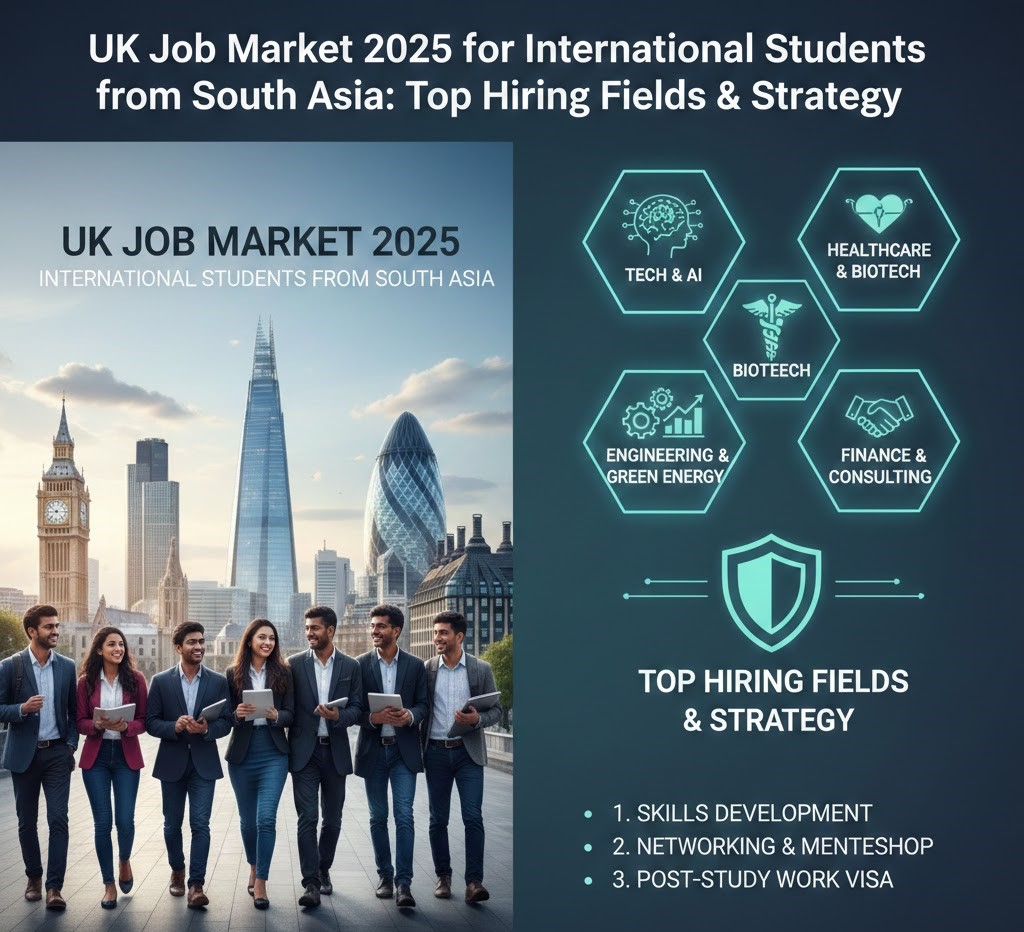
UK Job Market 2025 for International Students from South Asia: Top Hiring Fields & Strategy
Introduction
For students from countries like India, Pakistan, Bangladesh, Sri Lanka, Nepal and others in South Asia, the UK has long been a top destination for higher education. The appeal: world-class universities, exposure to global employers, and the hope of turning a UK qualification into meaningful employment.
But in 2025, the job market landscape has changed. Increased competition, visa/immigration reforms, and evolving sectoral demand mean that students must be far more strategic. In this article we break down which fields are showing the most promise for international students in the UK in 2025 — particularly those from South Asia — and provide actionable tips to maximise your chances.
1. What’s the overall market looking like?
Some headline facts:
- According to the most recent graduate labour market update from Prospects, roughly 57% of private-sector employers in the UK plan to hire graduates in the next three months. Prospects
- The UK is expecting around 150,000+ graduate-level job opportunities per year in priority sectors up to 2030. Prospects
- But there are warning signals: graduate job prospects have been reported to be under pressure in certain fields, and many international students report challenges. Reddit+2The Economic Times+2
In short: yes, jobs are there — but the competition is intense, and not all fields are equal. So the smart question for a South Asian student is: Which sectors offer the best prospects for me in the UK in 2025?
2. Top hiring fields in 2025 for international students
Based on multiple sources, here are the sectors where demand is strongest — and where you should focus if you’re a student from South Asia looking to stay in the UK or gain UK work experience.
1) Technology, Data & AI
This is one of the top-growth areas.
-
- Jobs in software engineering, data science & analytics, machine learning are in demand. edulytic.com+2upGrad+2
- According to one roundup: “Students with expertise in mobile app development, Python, Java, or C++ can readily locate … internships, freelancing work, or entry-level positions.” sagarconsultants.co.uk
What this means for you (from South Asia): If you are studying in a STEM area (computer science, information systems, software engineering) or can build strong tech skills + internships, you stand a decent chance. But beware: many roles will require demonstration of real-world experience, not just the degree.
2) Engineering & Renewable Energy / Infrastructure
Another sector showing solid opportunities:
- Civil, mechanical, electrical engineers are in high demand, especially given the UK’s net-zero and infrastructure ambitions. upGrad+1
- One article noted the shortage in civil engineering roles in the UK rose 84% between 2022 and 2024. Financial Times
For South Asian students: If your degree is in engineering (especially civil, mechanical, electrical) and you can secure a placement/industrial experience during your course, this field offers one of the stronger pathways.
3) Healthcare & Life Sciences
The UK’s healthcare sector continues to be a key employer:
- Demand for medical, biotechnology, public health graduates is cited. Eleevate Overseas+1
- Many international students from South Asia choose health-/medical-related degrees for this reason.
Caveat: While demand is real, competition is strong, visa/sponsorship requirements can be tricky, and employer expectations are high. Ensure you understand fees, registration/licensing, and real post-study employment prospects.
4) Finance, FinTech & Banking
Another major area especially in London and other major UK cities:
- London remains a global finance hub; roles in fintech, risk management, accounting continue to have openings.
For you: If your background is in finance, economics, accounting or you combine it with tech (for example fintech, data analytics for finance) you have a better chance. Pure business/marketing roles may face stronger competition.
5) Teaching / Education & Social Care
These fields also show demand:
- For example, shortages in teaching certain subjects (maths, physics, computing) are noted.
Important for South Asian students: If you are studying education, or a subject that qualifies you as a teacher or specialist in a subject in demand, this could be a viable route. But check whether your degree qualifies for relevant certifications/licensing.
3. Unique challenges for students from South Asia — and how to plan around them
Visa & Sponsorship hurdles
Many international students cite that needing employer sponsorship is a major barrier.
“Sadly yes, the sponsorship is the biggest issue for international students.” Reddit
Employers often prefer candidates without visa-sponsorship complexity. So:
- Prioritize employers who are licence sponsors (check the UK Home Office list).
- Build yourself into a candidate who looks like a low-risk hire (internships, clear skills, strong English, local experience).
- Be aware of salary / visa thresholds under the Skilled Worker route — these are steadily increasing. Reddit
Time-bound post-study windows
With the upcoming changes (for example, reduced length of the Graduate Route stay for many) the clock is shorter. This means:
- Start job-search activities early (during final year, placements).
- Ensure your university/employer-sponsored work experience counts.
- Have backup plans (return home, move to another country) so you’re not overly reliant on one outcome.
4. Strategy for South Asian Students: How to position yourself well
Here’s a checklist you should follow:
- Choose a degree aligned with the fields above (tech/data, engineering, healthcare, finance) vs a generic business degree unless it has strong placement/internship ties.
- Secure a placement year/internship during your degree if possible — this helps build experience and UK-work context.
- Network aggressively: attend university career-fairs, connect with alumni (especially from your country), join student societies, engage in industry projects.
- Be visa-aware: know the rules of the Graduate Route, Skilled Worker route, salary thresholds, employer licence sponsorship. Make sure your timeline and opportunities align.
- Target employers who sponsor international students; look for those who have done so before.
- Build transferable, demonstrable skills: e.g., project work in AI/data analytics, engineering design, research experience in healthcare. Employers are increasingly valuing skills and project-experience.
- Explore geographic flexibility: London has many jobs but very high cost of living; other cities (Manchester, Birmingham, Edinburgh) may offer better value and less competition. universitio.com
- Keep a “Plan B” mindset: even if your first aspiration is UK full-time employment, have a fallback (e.g., move back to South Asia with UK experience, or apply for jobs in Europe/Canada).
5. Outlook: What to expect in the next few years
- The sectors flagged (tech, engineering, healthcare, finance) are likely to continue as demand drivers in the UK.
- Entry-level roles are getting tougher: a drop in pure “junior/new grad” job openings is being reported. The Times
- Immigration / visa policy tightening means international students must be viewed as value-add by employers, not just as potential hire.
- For South Asian students, the ROI (return on investment) of studying in the UK is becoming more qualified: you’ll need to earn more, earlier, and stand out to make the study experience pay off.
Conclusion
The UK job market in 2025 offers real opportunities for international students from South Asia — but it no longer guarantees easy success. If you pick the right field (tech/data, engineering, healthcare, finance), build real-world experience, stay visa literate, and network smartly, you can position yourself ahead of the competition.
Remember: the story is not just “get the degree and you’ll get the job” anymore — it’s “get the degree, build the experience, show the value, and pick the employer who not just hires you but supports your visa/work trajectory.”
Read Our Other Helpful Guides
Related Posts



Comments (0)