
The United Kingdom remains a top destination for international students, combining world-class education with vibrant…

Hidden Costs of Studying Abroad in 2025 – What Students Forget to Budget For
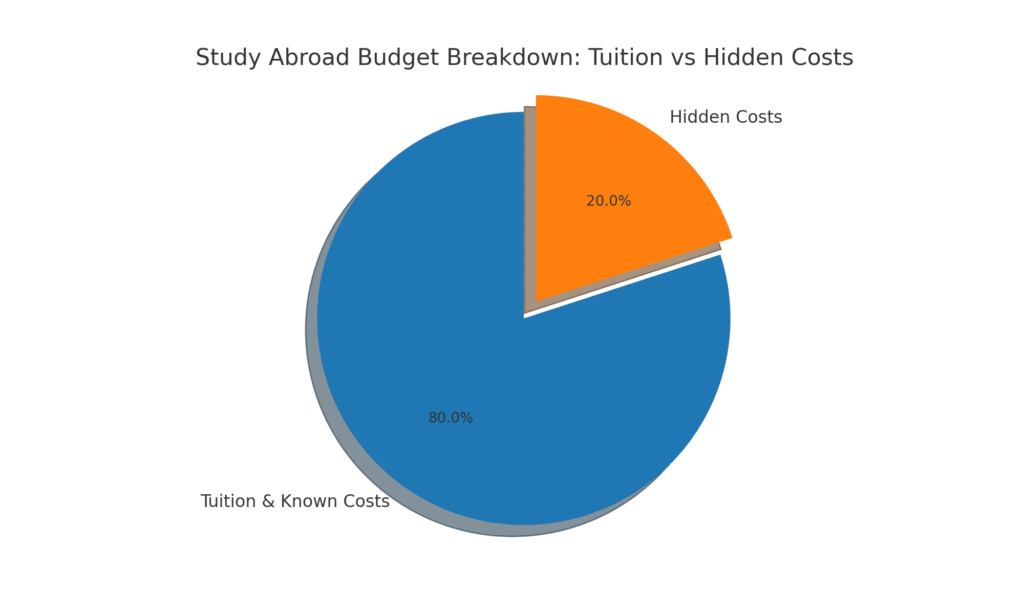
When students plan their dream of studying abroad, they often focus on tuition fees and rent. But in 2025, hidden expenses are catching many first-year international students off guard — from mandatory health insurance add-ons to seasonal clothing that can burn a hole in your wallet. According to international student budgeting data from Numbeo’s cost of living database, these overlooked costs vary significantly by country.
In this guide, we break down 10 often-overlooked costs, explain how to budget for them, and share pro tips from students who’ve been there.
[Image Placeholder: Student looking at laptop with shocked expression after seeing bills]
1. Visa Renewal & Immigration Fees
Many countries issue student visas that don’t cover your full study period — meaning you’ll pay again for renewal. Official requirements are always updated on government portals such as the U.S. Department of State student visa page.
Example Costs (2025):
- USA F-1 Visa Renewal: $160–$300 (plus travel if done outside the US)
- UK Student Visa Extension: £490 + £1,035 NHS surcharge
- Canada Study Permit Renewal: CAD $150
Tip:
Budget for renewal at least 6 months before expiry to avoid paying for urgent processing.
2. Mandatory Health Insurance Top-Ups
Some universities require you to upgrade to their official health plan even if you already have private coverage. Countries like Australia and the UK clearly outline student health cover rules on official portals such as the Australian Government OSHC page.
Hidden Catch: The upgrade often costs more than the base insurance, and payment is due before registration.
3. Seasonal Clothing & Gear
If you’re moving from India to Canada, Sweden, or Chicago, your first winter could cost $300–$600 in coats, boots, and thermal wear.
Pro Tip:
Buy off-season or check local thrift stores. Many campuses have winter gear swaps.
[Image Placeholder: Winter clothing checklist graphic]
4. Exam & Certification Fees
Beyond tuition, you might pay for:
- Language tests (TOEFL, IELTS retakes — see official fees on the IELTS test fee page)
- Course-specific exams (e.g., CPA, CFA modules)
- Lab safety certifications
5. Textbooks & Software
While many expect textbook costs, digital learning platforms (mandatory for some courses) can be an extra $50–$200 per semester.
Pro Tip:
Ask seniors if the same version is used every year — older editions are often half the price.
6. Commuting & Transport Passes
Public transport passes vary widely:
- Berlin: €49/month (2025 student rate)
- Sydney: AUD $60/month
- Boston: $90/month (unlimited subway + bus)
Even students living on campus often need transport for internships or shopping.
7. Currency Transfer & Bank Fees
International money transfers can eat 2–4% in fees. Students often compare platforms like Wise to reduce exchange-rate losses and bank charges.
- Transfer platform rates
- Local ATM withdrawal charges
- Bank’s foreign transaction fees
8. Unexpected Academic Materials
Think lab coats, art supplies, or engineering kits — these are often not included in tuition.
9. Networking & Conferences
Professional events are great for careers but can be $50–$300 per ticket, plus travel.
10. Housing Deposits & Furniture
If you rent privately, expect 1–2 months’ rent upfront plus costs for basic furniture.
Quick Budgeting Formula for Hidden Costs
A simple way to stay prepared in advance:
Hidden Costs Fund = (Monthly Living Costs × 15%) × Months Abroad
Example: If your monthly living cost is $1,200 for a 12-month program:
Hidden Costs Fund = $1,200 × 15% × 12 = $2,160
Final Advice
Hidden costs are unavoidable, but forewarned is forearmed. Plan for them, and you’ll spend your time abroad making memories — not stressing over surprise bills.
Read Our Other Helpful Guides:
- Study Abroad 2025: Which Destinations Are South Asian Students Favouring?
- Why Indian Students Choosing the UK Are Down 30% in 2025 — What’s Really Going On?
- Why Austria Is Emerging as a Top Study Abroad Destination in 2025
- UKVI Focus on Pakistan in 2025 — What Students Need to Know
Related Posts



Comments (0)