The United Kingdom remains a top destination for international students, combining world-class education with vibrant…
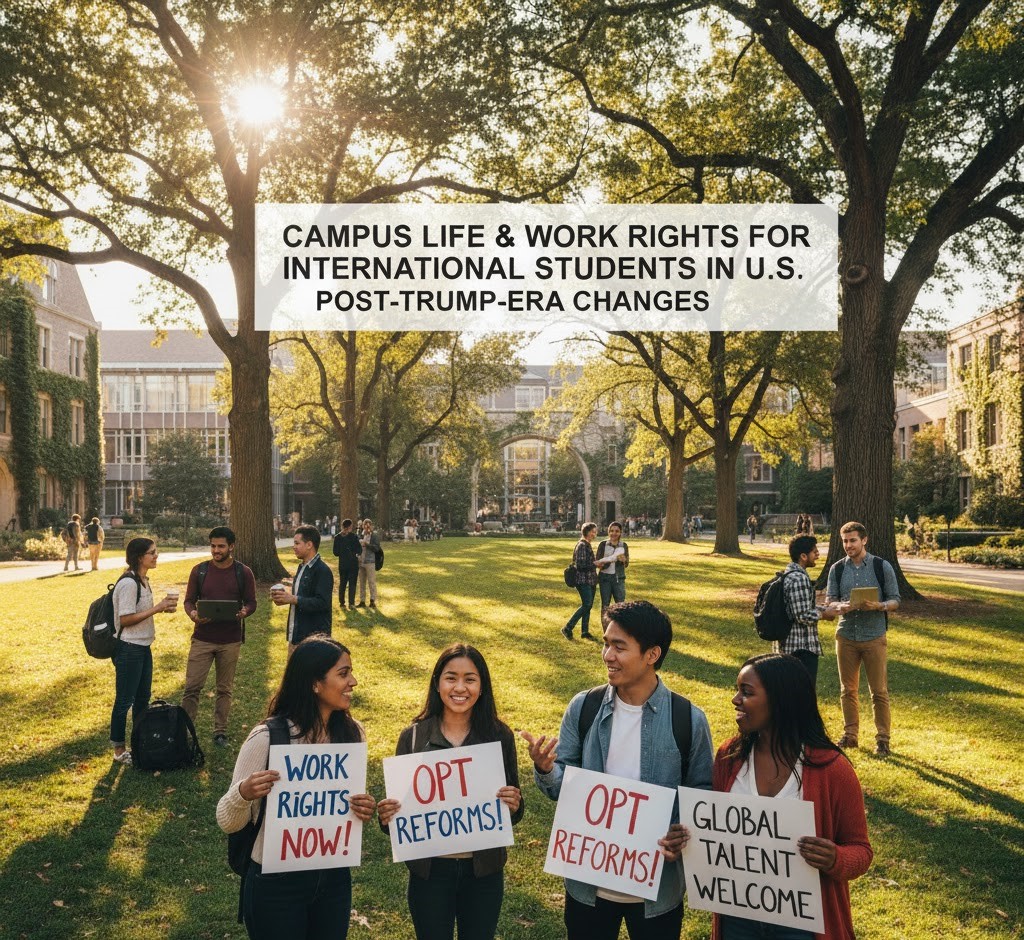
Campus Life & Work Rights for International Students in the U.S. After the Trump-Era Shake-Up
A Changed Landscape for International Students
For decades, the United States has been the dream destination for millions of international students — home to world-class universities, groundbreaking research, and unmatched career opportunities. But in the wake of political shifts and new policy directions during and after the Trump era, the student experience has taken on a new shape.
From tightened visa scrutiny to uncertainty around post-study work rights and evolving campus cultures, international students are navigating a more complex environment than before. Yet, with the right preparation and awareness, studying in the U.S. can still be an incredibly rewarding journey.
This guide explains US student visa rules, OPT work opportunities, and how policy changes impact international students in 2025.
1. Policy Shockwaves: How Trump-Era Rules Changed the Game
The recent policy turbulence began with the Trump administration’s proposed interventions in university admissions — including a 15% cap on international undergraduates at top U.S. universities and a limit of 5% from any single country (India Today).
While not fully implemented across the board, the message was clear: American higher education was entering a more protectionist phase. The ripple effects extended far beyond admissions — reshaping how universities budgeted, how students planned their education, and how visa offices assessed applications.
International students now face:
- Tougher visa scrutiny and longer processing times
- Increased anxiety about maintaining legal status
- Greater competition for campus jobs and internships
- A shift in university priorities, as institutions balance diversity goals with policy pressures
Quick Summary
- Stricter US student visa scrutiny after Trump era
- OPT and STEM OPT still available (up to 36 months)
- H-1B visa remains uncertain due to lottery system
- Increased competition for jobs and internships
2. Campus Life in 2025: A New Reality
The U.S. campus has always been a microcosm of global diversity — from vibrant student unions to multicultural festivals and collaborative learning spaces. Yet, in 2025, that atmosphere feels more cautious.
1. Rising Anxiety Among Students
Students from countries like India, Nigeria, Pakistan, and Vietnam report heightened concerns about visa renewals, political rhetoric, and travel risks. Some universities have noted fewer students participating in activism or public protests, fearing potential immigration consequences (Times of India).
2. Campus Support Systems Are Evolving
Universities are expanding international student offices, legal clinics, and peer mentoring programs to help students adjust. However, budget cuts — partly due to reduced international enrolment — have strained resources at some institutions (India Today).
3. Cultural Integration Still Thrives
Despite the challenges, campus life continues to offer unmatched cultural exposure. Student clubs, inter-cultural festivals, and shared learning spaces remain at the heart of the U.S. university experience — even as students adapt to new realities.
3.US Work Rights for International Students (OPT, CPT, H-1B Explained)
For many international students, the key motivation to study in the U.S. is access to high-quality work experience and post-study employment opportunities. But how have these been affected post-Trump?
1. OPT and STEM OPT Still Exist — But Scrutiny Has Increased
The Optional Practical Training (OPT) and STEM OPT programs — which allow students to work in the U.S. after graduation — remain in place. However, the approval process has become more rigorous, and employers are often required to submit additional documentation. Students in STEM fields still enjoy up to 36 months of post-study work, but the pathway now demands stronger employer compliance and timely application management.
2. CPT Rules and Internships
Curricular Practical Training (CPT) — used for internships during study — is also more tightly regulated. Universities are ensuring stricter adherence to program requirements, meaning students must plan early and maintain full-time enrolment status throughout.
3. Post-Study Visa Transition: The Uncertain H-1B Path
The H-1B work visa remains the most coveted route to stay in the U.S. after study. However, the quota system, random lottery, and changing administration policies have made it unpredictable. Students are increasingly exploring Canada, Germany, and Australia as backup destinations with clearer post-study migration pathways.
4. Voices from the Ground: Student Experiences
A recent Washington Post piece highlighted that many international students feel a mix of pride and pressure — proud to be studying in the U.S., but uncertain about their long-term prospects (Washington Post).
This growing sentiment underscores a new kind of realism among international students — a focus on value, stability, and alternative destinations if needed.
5. What Students from South Asia, Southeast Asia, and Africa Should Know
For students from India, Bangladesh, Nepal, Sri Lanka, Vietnam, Indonesia, Kenya, and Nigeria — the U.S. remains a top destination, but a more strategic approach is now essential:
- ✅ Research university policies – Check the international student percentage, support services, and OPT/CPT track record.
- ✅ Plan finances smartly – Budget for tuition, housing, and emergency funds; currency fluctuations can impact costs.
- ✅ Engage early with career centers – Networking and internships now matter more than ever.
- ✅ Stay visa-compliant – Keep your I-20 valid, report job updates, and maintain academic progress.
- ✅ Have a backup plan – Explore second destinations or hybrid study pathways (e.g., U.S.-Canada articulation routes).
6. Outlook: Hope, Adaptation, and Resilience
The U.S. education system continues to offer unmatched academic depth and research opportunities. While Trump-era and post-Trump policies have created uncertainty, they have also sparked innovation and resilience — both among universities and students.
- Universities are lobbying for friendlier international student policies.
- Employers are adjusting hiring strategies to retain global talent.
- Students are building flexible career paths that blend U.S. study with global mobility.
In short, while the U.S. may no longer be the “automatic choice,” it remains a powerful springboard — for those who plan wisely, stay informed, and adapt quickly.
Frequently Asked Questions (FAQs)
1. Can international students still work in the USA?
Yes, through OPT, STEM OPT, and CPT programs.
2. What is OPT in the USA?
Optional Practical Training allows students to work after graduation.
3. Is the H-1B visa guaranteed after study?
No, it is based on a lottery system and employer sponsorship.
4. Is the USA still good for international students?
Yes, but students must plan carefully due to policy changes.
Conclusion
Planning to study in the USA? Start early, understand visa rules, and prepare backup options to secure your future.
Read Our Other Helpful Guides
Related Posts


Comments (0)